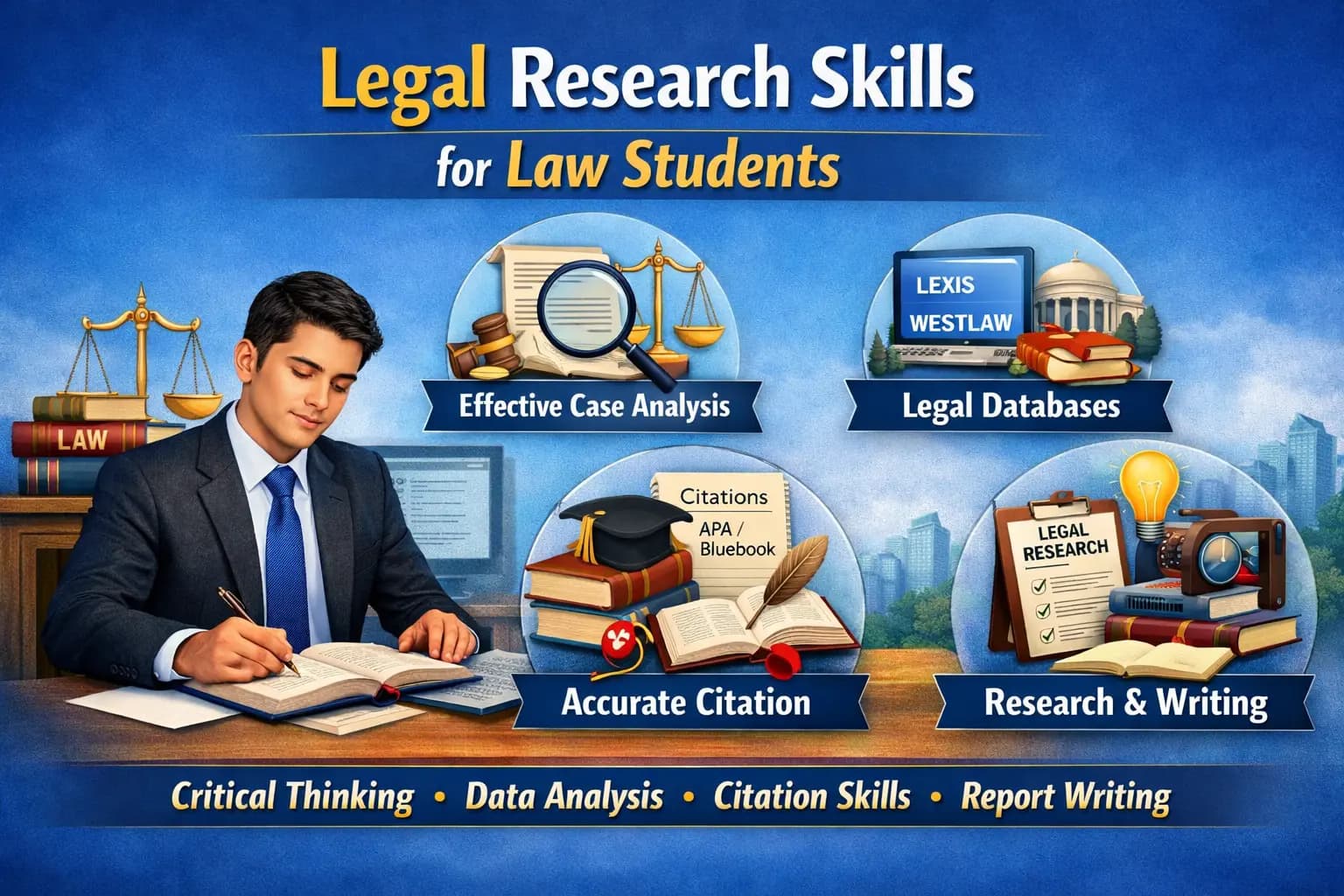
Legal research is one of the most valuable skills every law student should master. Whether you are preparing for examinations, participating in moot court competitions, drafting legal documents, or planning a career in litigation or corporate law, strong research abilities form the foundation of professional success.
Modern legal professionals rely on accurate legal research to interpret laws, analyse judicial decisions, understand legal principles, and provide practical legal solutions. Developing this skill during your law programme can significantly improve your academic performance and future career opportunities.
What is Legal Research?
Legal research is the process of identifying, analysing, and interpreting laws, regulations, judicial decisions, and legal principles to answer specific legal questions.
It helps students understand:
- Constitutional provisions
- Statutory laws
- Judicial precedents
- Legal doctrines
- Government regulations
- International legal principles
Legal research enables students to build logical arguments supported by reliable legal sources.
Why Legal Research is Important
Every legal professional depends on research before providing legal advice or preparing legal documents.
Strong legal research helps students:
- Understand complex legal issues
- Develop analytical thinking
- Strengthen legal arguments
- Improve drafting quality
- Support academic assignments
- Prepare for internships
- Build confidence in legal practice
Research is a skill that remains valuable throughout a legal career.
Primary Sources of Law
Law students should become familiar with primary legal sources, including:
Constitution
The Constitution provides the legal framework and fundamental principles governing the country.
Statutes
Acts passed by legislative bodies form an important part of legal research.
Judicial Decisions
Court judgments explain how laws are interpreted and applied.
Rules and Regulations
Government departments issue rules and regulations to implement legislative provisions.
Secondary Sources of Legal Research
Secondary resources help students understand and interpret legal concepts.
Examples include:
- Legal Commentaries
- Academic Journals
- Law Books
- Research Papers
- Legal Encyclopedias
- Professional Articles
These materials provide valuable explanations and scholarly perspectives.
Essential Legal Research Skills
Reading and Understanding Laws
Students should practise reading legal provisions carefully while understanding their purpose and practical application.
Case Analysis
Analysing judicial decisions helps students understand:
- Facts of the case
- Legal issues
- Court reasoning
- Final judgment
- Legal significance
Case analysis strengthens critical thinking.
Legal Writing
Research supports effective drafting of:
- Research Papers
- Case Notes
- Legal Opinions
- Memorials
- Moot Court Submissions
- Assignments
Clear writing reflects strong legal understanding.
Citation Skills
Students should learn proper citation methods while preparing academic and legal documents.
Accurate citations improve credibility and academic integrity.
Common Challenges Faced by Law Students
Many students initially struggle with legal research because of:
- Complex legal language
- Large volumes of information
- Difficulty locating relevant cases
- Limited research planning
- Poor source evaluation
Regular practice gradually improves research efficiency.
Tips to Improve Legal Research Skills
Students can strengthen their abilities by following these practices:
Read Judgments Regularly
Reading landmark judgments improves legal understanding and analytical ability.
Stay Updated
Follow legal developments, amendments, and important judicial decisions.
Practice Legal Writing
Prepare summaries, case briefs, and research notes to improve legal drafting.
Participate in Moot Courts
Moot court competitions encourage practical legal research and argument preparation.
Attend Workshops
Legal seminars and workshops introduce students to research methods and current legal developments.
Learn Digital Research
Modern legal practice increasingly relies on digital legal databases and online research platforms.
Role of Legal Research in Different Careers
Research skills are valuable across multiple legal professions.
Litigation
Advocates rely on research to prepare arguments and analyse case law.
Corporate Law
Corporate lawyers research regulations, contracts, and compliance requirements.
Legal Consultancy
Consultants use legal research to advise businesses and organisations.
Academia
Researchers and professors conduct detailed legal analysis and publish scholarly work.
Public Policy
Policy professionals study legal frameworks before recommending legislative reforms.
Digital Transformation in Legal Research
Technology has made legal research faster and more accessible.
Students increasingly use digital resources for:
- Case Law Research
- Legislative Updates
- Academic Publications
- Legal News
- Research Databases
Understanding digital research tools has become an important professional skill.
How Vidyapun Supports Future Legal Professionals
Vidyapun believes that quality legal education goes beyond classroom learning.
We help students through:
- Law Admission Guidance
- University Comparison
- Academic Counselling
- Career Planning
- Course Selection Support
- Documentation Assistance
- Higher Education Guidance
Our goal is to help students build a strong academic foundation for successful legal careers.
Frequently Asked Questions
Why is legal research important for law students?
Legal research helps students understand laws, analyse judgments, strengthen legal arguments, and improve academic and professional performance.
What are primary legal sources?
Primary sources include constitutions, statutes, judicial decisions, rules, and regulations that have legal authority.
Can legal research improve career opportunities?
Yes. Strong research skills are valuable in litigation, corporate law, legal consultancy, compliance, academia, and public policy.
How can students improve legal research?
Regular reading, legal writing, case analysis, internships, workshops, and moot court participation help students develop strong research skills.
How can Vidyapun help aspiring law students?
Vidyapun provides admission guidance, university comparison, career counselling, and educational support for students pursuing recognised law programmes.
Author's Note
Reviewed by the Vidyapun Education Team
This article is intended for educational purposes and provides general guidance on legal research skills. Research methods and academic requirements may vary depending on universities and legal institutions. Students should consult their faculty and use authentic legal resources for academic work.
Conclusion
Legal research is one of the most valuable skills every law student can develop. It strengthens analytical thinking, legal writing, problem-solving, and professional confidence while preparing students for diverse careers in litigation, corporate law, academia, and public policy. By developing strong research habits early in your legal education, you can build a solid foundation for lifelong learning and professional success.
Website: www.vidyapun.com
Call / WhatsApp: +91 96438 02216
Looking to pursue a recognised law programme? Contact Vidyapun today for expert admission guidance, university comparison, and personalised support to help you achieve your legal career goals.