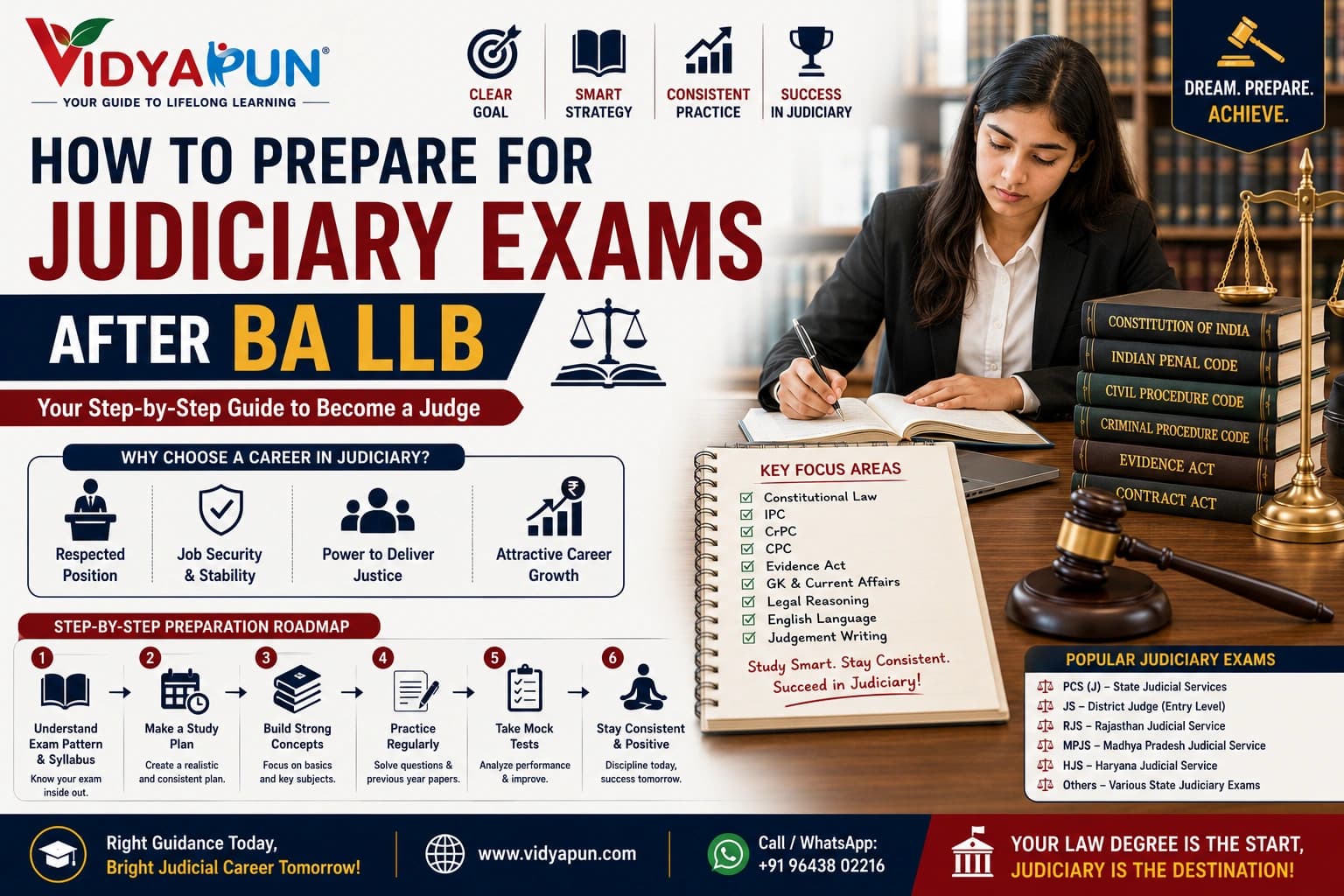
Becoming a civil judge straight after BA LLB is a genuine, well-trodden path in India — but it's also one where the rules differ meaningfully from state to state, more than most first-time aspirants expect. There's no single, unified "judiciary exam" for the whole country; instead, each state conducts its own judicial services examination with its own eligibility, pattern, and syllabus.
This guide covers what judiciary exams generally involve, how to think about eligibility and preparation, and when to realistically start — while being upfront about where you need to verify specifics directly with your target state's exam authority.
What Are Judiciary Exams and Who Conducts Them?
Understanding the decentralized nature of this exam system is the essential starting point.
State-Wise Judicial Services Exams
Each state (or, in some cases, a group of states) conducts its own judicial services examination, typically through the state Public Service Commission or High Court, to recruit civil judges (junior division) at the entry level.
Why There's No Single National Judiciary Exam
Because judicial recruitment is organized at the state level, eligibility criteria, exam pattern, syllabus, and even the specific local laws tested differ meaningfully between states. This means your preparation strategy needs to be tailored to your specific target state (or states) rather than following one universal approach.
Eligibility for Judiciary Exams
Eligibility criteria vary by state and can change over time, making direct verification essential.
Minimum Qualification and Age Limits
Most states require a law degree (BA LLB, LLB, or equivalent) from a recognized university, along with an age limit that varies by state — commonly somewhere in the mid-to-late 20s to early 30s range, though this differs significantly and is subject to change. Always confirm the current age limit and any category-based relaxations directly from your target state's official notification.
Practice Requirement in Some States
Some states have, at various points, required a minimum period of practice as an advocate before being eligible for judicial services, while others allow fresh law graduates to apply directly. This specific requirement has been a subject of policy debate and change in recent years, so verify the current rule for your target state rather than assuming either way.
Judiciary Exam Pattern: What to Expect
While specifics vary by state, most judicial services exams follow a broadly similar multi-stage structure.
Preliminary, Mains, and Interview Stages
Most states conduct a preliminary (objective-type) exam, followed by a mains examination (typically descriptive, law-focused papers), and a final interview stage for candidates who clear both written stages. The specific number of papers, marks distribution, and stage names vary by state.
Typical Subjects Tested
Common areas tested across most states include Constitutional Law, the Civil Procedure Code, the Criminal Procedure Code, Evidence Law, and often a paper specific to that state's local laws and regional language proficiency — this last component is a common surprise for candidates who don't research state-specific requirements early.
When to Start Preparing During BA LLB
Starting early gives you a meaningful advantage, given how competitive these exams generally are.
Building a Foundation From Earlier Years
Strong performance in core procedural subjects (Civil Procedure Code, Criminal Procedure Code, Evidence Law) during your regular BA LLB coursework builds a genuine foundation for judiciary preparation later, so treat these subjects with extra seriousness even before you begin dedicated exam prep.
Intensifying Preparation in Final Year
Most serious aspirants begin focused, exam-specific preparation during their final year or the months immediately following graduation, given how competitive these exams are and how much dedicated revision the syllabus typically requires.
How to Structure Your Judiciary Exam Preparation
A structured, disciplined approach matters more here than in many other legal career paths.
Core Subjects and Bare Acts
Build deep familiarity with bare acts for the core tested subjects, since judiciary exams typically test precise, provision-level knowledge rather than general conceptual understanding alone. Supplement this with quality reference material specific to your target state's syllabus.
Answer Writing and Mock Interviews
Regular practice writing mains-style descriptive answers under timed conditions, and participating in mock interviews closer to your exam date, are both widely considered essential preparation components beyond just reading and understanding the material.
Common Mistakes Judiciary Aspirants Make
A few recurring patterns are worth actively avoiding.
Starting Preparation Too Late
Given how competitive most state judiciary exams are, starting serious preparation only a few months before the exam — rather than building a foundation during BA LLB itself — is one of the most common reasons capable candidates underperform relative to their potential.
Neglecting State-Specific Local Laws
Focusing exclusively on major central subjects while neglecting state-specific local laws and regional language requirements is a frequent, avoidable gap, since these components are often weighted meaningfully in the mains exam for many states.
Frequently Asked Questions
1. Is there one national judiciary exam for all of India?
No, each state conducts its own judicial services examination through its Public Service Commission or High Court, with its own eligibility, pattern, and syllabus.
2. What is the eligibility for judiciary exams after BA LLB?
Generally a recognized law degree and meeting the age limit set by your target state, though some states have additional requirements like a minimum practice period. Always verify current eligibility directly with your target state's official notification.
3. Do I need work experience as a lawyer before appearing for judiciary exams?
This depends on the state — some require a minimum practice period, while others allow fresh law graduates to apply directly. This has been a changing area of policy, so confirm the current rule for your target state.
4. What subjects are tested in judiciary exams?
Commonly Constitutional Law, Civil Procedure Code, Criminal Procedure Code, Evidence Law, and often a state-specific local laws and regional language component, alongside preliminary and interview stages.
5. When should I start preparing for judiciary exams during BA
LLB? Build a strong foundation in core procedural subjects throughout your coursework, and begin focused, exam-specific preparation during your final year or shortly after graduation, given how competitive these exams typically are.
6. What's the most common mistake judiciary aspirants make?
Starting dedicated preparation too late, and neglecting state-specific local laws in favor of only focusing on major central subjects.
Ready to build a strong foundation from day one? Explore full details on the BA LLB course page, or use Vidyapun's Admission Chances Predictor if you're still finalizing your college choice.
Still have questions about planning your judiciary preparation? Reach out to our counsellors directly.
🌐 Website: www.vidyapun.com 📞 Call / WhatsApp: +91 96438 02216