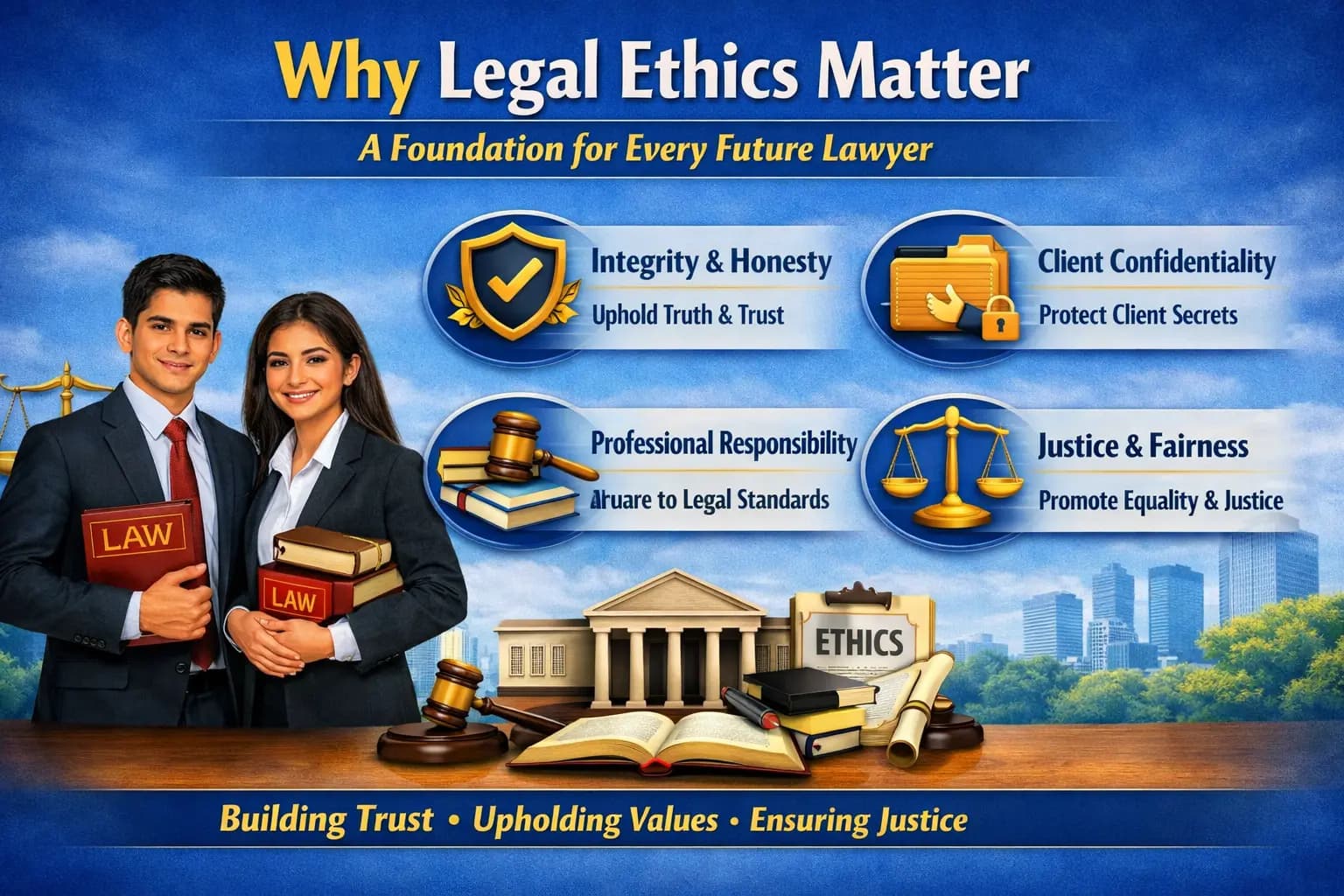
A successful legal career is built on more than legal knowledge. Every lawyer is expected to uphold honesty, fairness, professionalism, and accountability while serving clients and society. These values are collectively known as legal ethics.
Whether you are pursuing an LLB, BA LLB, or LLM, understanding legal ethics is just as important as learning legal principles. Ethical decision-making helps legal professionals maintain public trust, deliver justice responsibly, and strengthen the credibility of the legal system.
What Are Legal Ethics?
Legal ethics are the professional standards and moral principles that guide lawyers in their daily practice. They help ensure that legal professionals perform their duties responsibly while respecting the rights of clients, courts, and society.
Ethics influence every stage of legal practice, from client communication to courtroom conduct and professional relationships.
Why Ethics Are Important in Law
The legal profession plays a significant role in protecting justice and maintaining public confidence.
Ethical practice helps lawyers:
- Build client trust
- Maintain professional credibility
- Protect confidential information
- Make fair decisions
- Avoid professional misconduct
- Strengthen the justice system
A lawyer's reputation is often built on ethical behaviour as much as legal expertise.
Honesty Builds Professional Reputation
Honesty is one of the most respected qualities in the legal profession.
Future lawyers should always:
- Present facts accurately
- Avoid misleading information
- Respect legal procedures
- Maintain transparency with clients
- Act responsibly
Professional integrity creates long-term trust with clients and colleagues.
Confidentiality is Essential
Clients often share sensitive personal and business information with their legal representatives.
Law students should understand the importance of:
- Protecting confidential information
- Respecting client privacy
- Maintaining professional discretion
- Following ethical obligations
Confidentiality remains a cornerstone of professional legal practice.
Respect for the Rule of Law
Lawyers are expected to uphold the rule of law regardless of personal opinions or external pressures.
Legal education teaches students to:
- Respect constitutional values
- Support fair legal processes
- Promote equal access to justice
- Act within legal boundaries
These principles strengthen democratic institutions and public confidence.
Professional Responsibility
Ethical lawyers understand their responsibilities toward:
- Clients
- Courts
- Society
- Colleagues
- Legal Institutions
Professional responsibility requires careful judgment, accountability, and respect for legal standards.
Ethical Challenges in Modern Legal Practice
As technology and business evolve, lawyers increasingly encounter new ethical considerations.
Examples include:
- Digital Privacy
- Artificial Intelligence
- Cybersecurity
- Online Legal Services
- Data Protection
- Cross-Border Legal Practice
Understanding ethical principles helps lawyers navigate these emerging challenges responsibly.
Developing Ethical Values During Law School
Ethics are developed through continuous learning and practical experience.
Students can strengthen ethical awareness by:
- Participating in legal discussions
- Reading landmark judgments
- Following professional codes of conduct
- Engaging in internships
- Learning from experienced legal professionals
- Reflecting on real-life legal situations
Ethical habits formed during education often shape future professional conduct.
Benefits of Ethical Legal Practice
Legal professionals who consistently demonstrate ethical behaviour often enjoy long-term professional benefits.
These include:
- Strong professional reputation
- Client confidence
- Better professional relationships
- Greater career opportunities
- Personal credibility
- Respect within the legal community
Ethics contribute to sustainable career growth.
Ethics Across Different Legal Careers
Legal ethics are important in every legal profession, including:
Litigation
Advocates must represent clients responsibly while respecting court procedures.
Corporate Law
Corporate lawyers handle confidential business information and advise organisations on responsible legal compliance.
Legal Consultancy
Consultants provide objective, transparent, and professional legal advice.
Public Service
Government legal professionals contribute to policy implementation while maintaining impartiality and accountability.
Academia
Legal researchers and educators uphold academic integrity through original research and responsible scholarship.
Why Choose Vidyapun?
A successful legal career begins with quality education and the right guidance.
Vidyapun supports aspiring legal professionals through:
- LLB Admission Guidance
- BA LLB Admission Support
- LLM Admission Counselling
- University Comparison
- Eligibility Assessment
- Documentation Assistance
- Career Counselling
Our experienced counsellors help students choose recognised universities that provide a strong academic foundation for future legal professionals.
Frequently Asked Questions
What are legal ethics?
Legal ethics are professional principles that guide lawyers in maintaining honesty, integrity, confidentiality, and responsible legal practice.
Why should law students study legal ethics?
Ethics help students develop professional values that are essential for building trust, protecting client interests, and maintaining the credibility of the legal profession.
Do legal ethics apply only to advocates?
No. Ethical principles are important for legal consultants, corporate lawyers, researchers, compliance professionals, and all individuals working in legal fields.
How can students improve ethical awareness?
Students can improve ethical understanding by studying professional standards, participating in internships, analysing legal cases, and learning from experienced legal practitioners.
How can Vidyapun help future law students?
Vidyapun provides admission guidance, university comparison, career counselling, and educational support to help students pursue recognised law programmes.
Author's Note
Reviewed by the Vidyapun Education Team
This article is intended for educational purposes only. Ethical standards and professional responsibilities may vary depending on applicable laws, institutional policies, and professional regulations. Students should consult official legal authorities and university guidelines for current information.
Conclusion
Legal ethics are the foundation of every successful legal career. While legal knowledge enables professionals to interpret and apply the law, ethical values ensure that this knowledge is used responsibly, fairly, and with integrity. By developing ethical principles during legal education, students prepare themselves to become trusted professionals who contribute positively to the justice system and society.
Website: www.vidyapun.com
Call / WhatsApp: +91 96438 02216
Looking to build a successful legal career? Contact Vidyapun today for expert guidance on recognised law programmes, university selection, and personalised admission support to help you achieve your academic and professional goals.