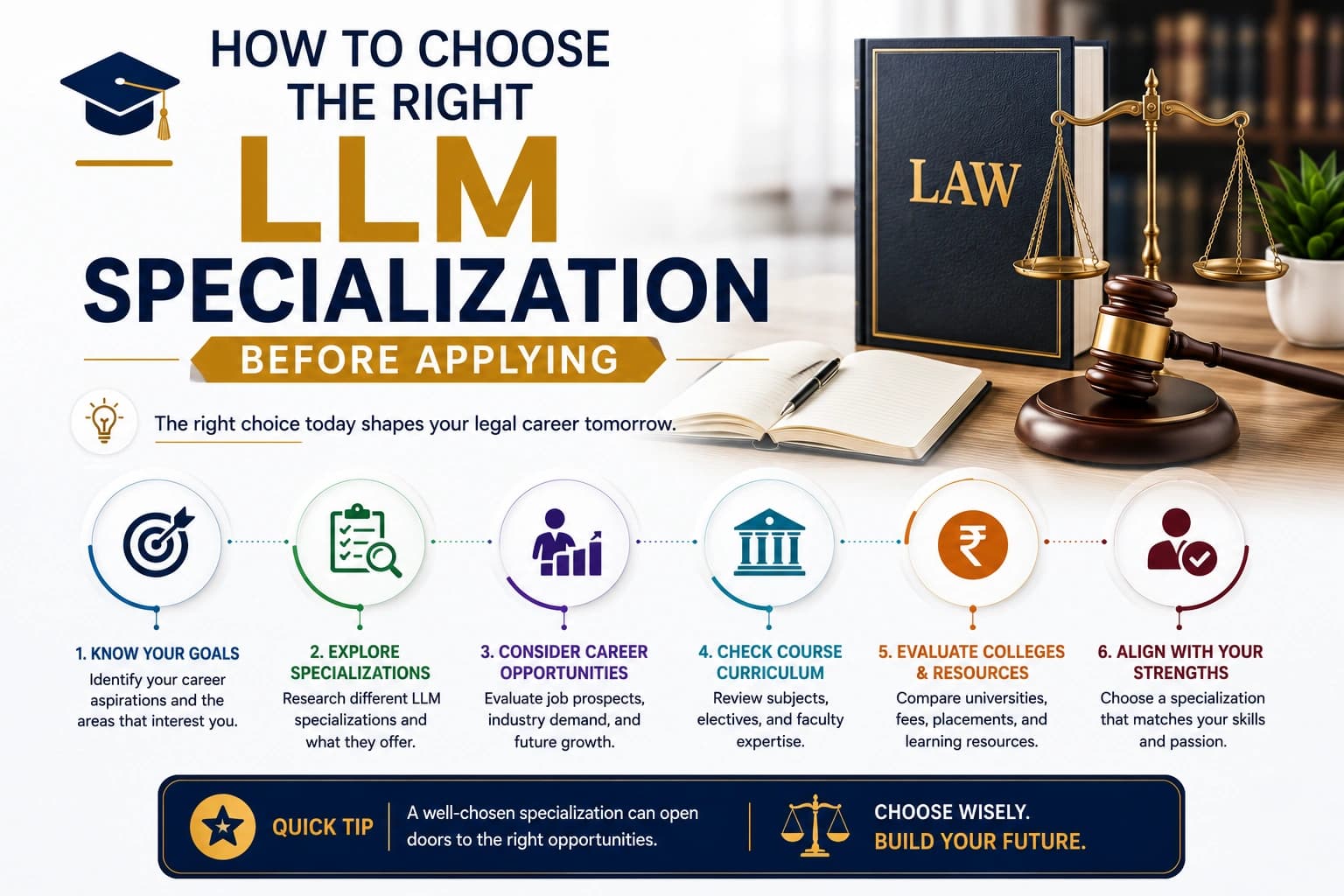
Unlike LLB, where the coursework is largely fixed for every student, LLM is built almost entirely around the specialization you choose — and that single decision shapes your coursework, your dissertation topic, your internship targets, and often your first job after graduation. Getting it right matters more than most applicants initially realize.
This guide walks through a practical, step-by-step approach to choosing your LLM specialization, so the decision is grounded in genuine fit rather than guesswork or prestige alone.
Why Specialization Choice Matters More in LLM Than LLB
Understanding why this decision carries more weight helps you approach it with the seriousness it deserves.
Specialization vs Generalist Training
LLB is designed to give you broad, foundational legal knowledge across virtually every major area of law. LLM strips that away in favor of depth — you'll spend an entire program studying one area in significant detail, which means the specialization you pick effectively becomes your professional identity for the next phase of your career.
How This Decision Affects Your Career Trajectory
Employers, particularly in corporate law firms and specialized practice areas, often look specifically for LLM candidates with relevant specialization training. Choosing a specialization that doesn't align with your career direction can mean spending a year or two building expertise you won't end up using professionally.
Step 1: Reflect on Your LLB Experience
Your own academic and internship history during LLB is often the most reliable, underused signal available to you.
Which Subjects and Internships Engaged You Most
Look back at which LLB electives you genuinely enjoyed, and which internships felt engaging rather than merely tolerable. This is usually a more honest indicator of fit than any external ranking of "popular" or "high-paying" specializations.
Signals to Look for in Your Own Interests
Pay attention to patterns — did you consistently gravitate toward transactional, deal-based work, or toward advocacy and courtroom-style problem solving? Did research-heavy assignments energize you, or did you find yourself more drawn to client-facing, practical work? These patterns often point toward a specialization family (corporate/commercial versus litigation/public law versus research/academia) even before you've named a specific area.
Step 2: Map Specializations to Career Paths
Once you have a general direction, map it against the concrete specialization options available.
Corporate and Commercial Law
If transactional, deal-based work appealed to you, Corporate Law, Banking Law, Competition Law, or Taxation Law align well with law firm and in-house counsel career paths, particularly at institutions with strong corporate law placement records.
Litigation, Judiciary, and Public Law Specializations
If courtroom advocacy, constitutional interpretation, or public interest work drew you in, Constitutional Law, Criminal Law, or Human Rights Law specializations align more closely with litigation practice, judiciary exam preparation, or public sector legal roles.
Step 3: Research Emerging and Niche Specializations
Beyond the traditional categories, several newer specialization areas are worth genuine consideration if they match your interests.
Cyber Law and Technology Law
With growing digital regulation and data protection concerns, Cyber Law and Technology Law specializations are gaining relevance, particularly for students interested in the intersection of law and technology companies.
Environmental Law and Human Rights Law
Environmental Law and Human Rights Law specializations suit students drawn to policy work, NGO careers, or international law organizations, and both areas have seen growing academic and practical relevance in recent years.
Step 4: Evaluate Specialization Strength by University
Not every university is equally strong in every specialization — this is where general reputation can mislead you.
Faculty Expertise and Research Output
Research the specific faculty teaching your target specialization at each university — their publication record, practical experience, and areas of research focus. A university's overall ranking doesn't guarantee strength in every individual specialization it offers.
Placement and Alumni Outcomes in That Specialization
Where possible, look at placement outcomes specifically for graduates of that specialization, not just the university's overall placement statistics. A strong overall placement record can mask weak outcomes in a less-emphasized specialization track.
Step 5: Consider Market Demand and Long-Term Growth
Balancing personal interest with practical career considerations leads to a more sustainable decision.
Which Specializations Are Growing
Corporate law, technology and data law, and areas tied to regulatory compliance have generally seen strong demand growth in recent years, though this can shift, so research current hiring trends rather than relying on older assumptions about which fields are "hot."
Balancing Passion with Practicality
A specialization you're genuinely interested in but which has narrower job prospects isn't automatically the wrong choice — it depends on your personal risk tolerance, financial situation, and whether you're drawn to academia, research, or policy roles where narrower specializations can still offer strong (if different) career paths.
Step 6: Talk to Practitioners and Alumni
First-hand perspective from people already working in your prospective specialization is often more useful than any ranking or brochure.
Getting Real-World Perspective
Reach out to LLM alumni or practicing lawyers in your prospective specialization — LinkedIn, your LLB college's alumni network, or professors with relevant connections are good starting points. Most practitioners are willing to share a candid perspective if approached respectfully and specifically.
Questions to Ask Working Professionals
Ask about the realistic day-to-day nature of work in that specialization, how competitive entry-level roles are, and what they wish they'd known before choosing that path themselves. These conversations often surface practical realities that don't come through in university marketing material.
Step 7: Weigh Specialization Against Location and Cost
Your final decision also needs to account for practical constraints, not just academic and career fit.
Availability Across Universities
Confirm that your chosen specialization is actually offered at universities within your realistic shortlist — not every institution offers every specialization, and a niche area might significantly narrow your options.
Cost-Benefit of a Niche vs Popular Specialization
Popular specializations like Corporate Law are often available at more universities, sometimes creating more competition for seats, while niche specializations might mean fewer options but potentially less competitive admission. Weigh this against your budget and location preferences realistically.
Common Mistakes When Choosing an LLM Specialization
A few recurring errors are worth actively guarding against.
Choosing Based on Prestige Alone
Selecting a specialization purely because it sounds impressive or is currently trending, without genuine interest or career alignment, is one of the most common regrets LLM graduates report a few years into their careers.
Ignoring Long-Term Career Fit
Failing to research actual career outcomes and day-to-day realities of a specialization — relying instead on assumptions — often leads to a mismatch discovered only after significant time and money have been invested.
Finalizing Your Decision
Bringing everything together into an actual shortlist is the last practical step.
Creating a Shortlist of 2-3 Specializations
Rather than committing to a single specialization prematurely, narrow your options to two or three genuinely appealing areas, and use the research steps above (faculty strength, market demand, practitioner conversations) to make your final call with real information rather than a single early impression.
Confirming Availability at Your Target Universities
Before finalizing, cross-check that your top specialization choices are actually offered — with genuine faculty strength — at the universities on your admission shortlist, adjusting either your specialization or your university list as needed to align both decisions.
Frequently Asked Questions
1. How do I know which LLM specialization is right for me? Start by reflecting on which LLB subjects and internships genuinely engaged you, then map that interest against career paths and research specific universities' strength in that area, rather than choosing based on general popularity alone.
2. Is Corporate Law the best LLM specialization? It's a strong choice for students interested in law firm or in-house counsel careers, but "best" depends entirely on your own interests and career goals — Constitutional Law, Human Rights Law, or Cyber Law may be better fits for different career directions.
3. Should I choose a specialization based on job market demand? Market demand is worth considering, but balancing it with genuine personal interest tends to lead to better long-term satisfaction and performance than choosing purely by perceived market trends.
4. Can I change my LLM specialization after starting the program? This varies by university and is generally difficult once enrolled, since course structures are built around your chosen specialization from the outset. Confirm your choice carefully before applying rather than assuming it can be changed easily later.
5. Do all universities offer the same LLM specializations? No, specialization offerings vary significantly by university. Always confirm that your desired specialization is genuinely available — and taught by strong faculty — at each institution on your shortlist.
6. Is it better to choose a popular or a niche LLM specialization? Neither is universally better — popular specializations often mean more competition for seats but wider institutional availability, while niche specializations may mean fewer options but potentially less competitive admission. The right choice depends on your specific interests and goals.
7. Should I talk to alumni before choosing my LLM specialization? Yes, where possible. First-hand perspective from practitioners or alumni in your prospective specialization often reveals practical realities that aren't apparent from university marketing material alone.
8. What's the biggest mistake students make when choosing an LLM specialization? Choosing based on prestige or trends rather than genuine interest and career alignment is the most commonly cited regret among LLM graduates a few years into their careers.
Ready to explore your options? Review full details on the Master of Laws (LLM) page, check Career After LLM to see where different specializations typically lead, or explore Law Admission guidance for the complete application process. Considering studying abroad instead? See our LLM Abroad Guide.
Download our LLM Specialization Brochure or talk to an admission expert:
🌐 Website: www.vidyapun.com 📞 Call / WhatsApp: +91 96438 02216